
Occupational Therapy

Special Needs Occupational Therapy Designed for Your Child
Pediatric occupational therapy taps into the power of play to work on developmental skills–motor, cognitive, social, language, self-help, and behavior.
HHTS occupational therapists use play-oriented therapy to encourage your child to become more independent now and as an adult.
Developing Daily Independence Through Play
Our therapists pay attention to your child’s behavior, their response to different aspects of play, and its meaning to them.
By using play as a tool, your child develops the skills necessary to function as an independent adult.
You have dreams for what your child will be able to do one day. Occupational therapy helps those goals become your child’s reality.
Skills We Work on in Occupational Therapy
- Eating
- Dressing
- Grooming
- Bathing
- Social interactions
- Handwriting
- Coordination
- Attention and focus
- Communication
- Motor skills
We’re Also Certified In
- Masgutova Neuro-sensory Reflex Integration (MNRI)
- Sensory Oral Sequential Feeding Approach (SOS)
- Handwriting Without Tears
- Plus, we have extensive experience in creating sensory diets and home programs
Therapy at HHTS is Both Enjoyable and Effective
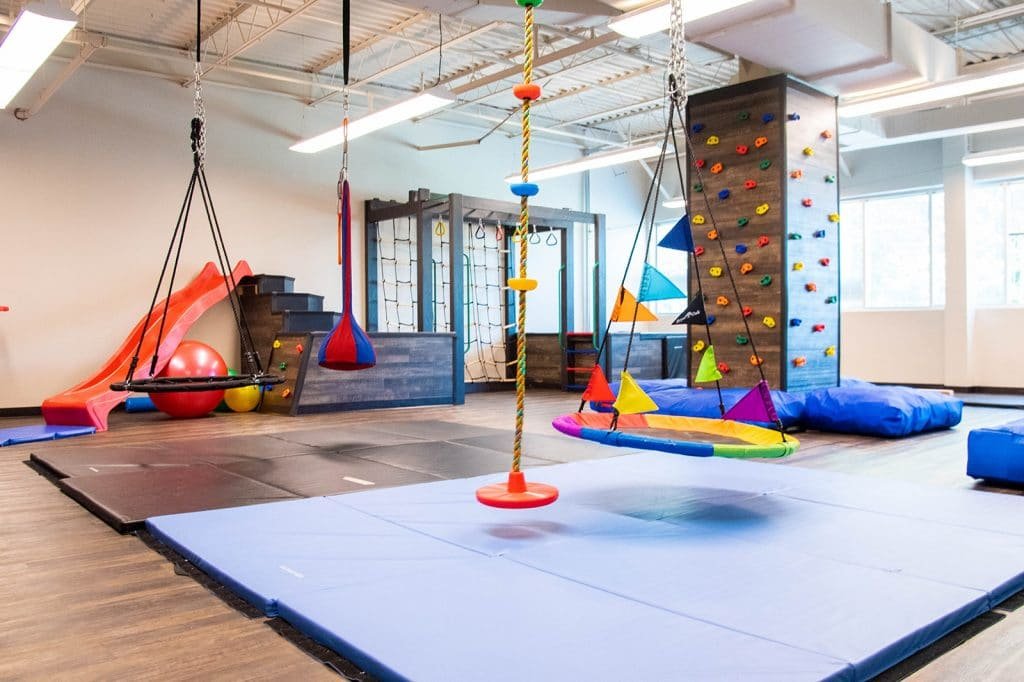
Our Clinics are
Warm and Inviting
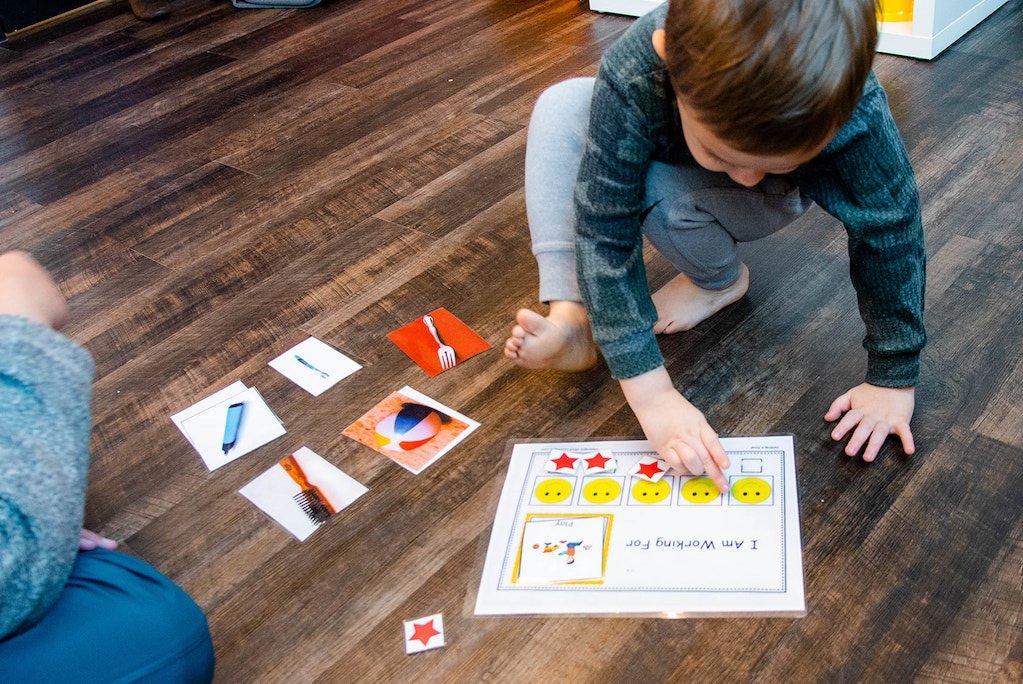
Therapists Engage Your Child in Colorful, Interactive Activities
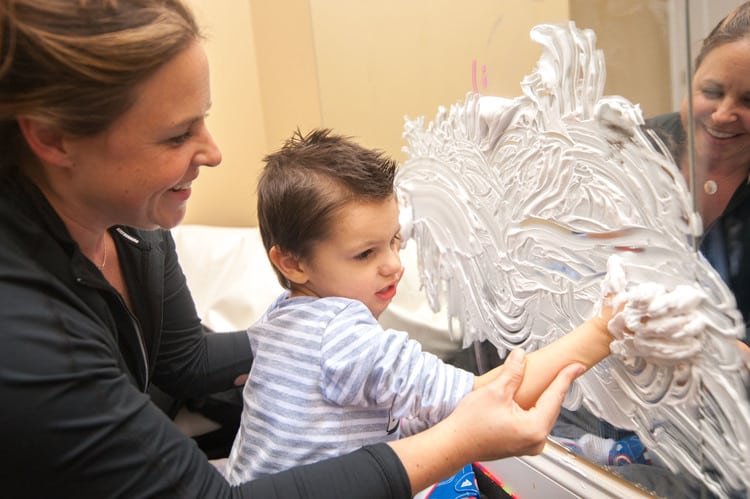
Your Child Grows and Gains Confidence While Having Fun
Occupational Therapy FAQs
What are some common diagnoses pediatric occupational therapists see?
Occupational therapists work with a wide range of children across many different diagnoses and developmental history. At Hearts and Hands Therapy, our occupational therapists commonly work with children who have been diagnosed
with autism spectrum disorder, sensory processing disorder, attention deficit
hyperactivity disorder, developmental delays, Down syndrome, cerebral palsy, traumatic brain injury, dyspraxia or developmental coordination disorder, learning disabilities, anxiety, dyslexia, and feeding disorders. Some children we see have a formal diagnosis, while others simply have areas of development where they need a little extra support. Regardless of where your child is starting from, our team meets them where they are and builds a plan that is tailored to their unique needs.
Can OT Help with Sensory Processing Issues?
Yes. Sensory processing is one of the most common reasons families seek out pediatric occupational therapy, and OT can make a meaningful difference. Sensory processing refers to how the brain takes in information from our senses (touch, sound, movement, taste, smell, sight, and body awareness) and turns it into appropriate responses. When a child’s sensory system is over or under responsive, everyday experiences can feel overwhelming. Signs your child may have sensory processing challenges include extreme reactions to clothing fabrics, covering ears in loud or busy environments, avoiding messy play, avoiding certain food textures, constantly seeking movement, difficulty transitioning between activities, or trouble with personal space.
What Does a Pediatric Occupational Therapist Do?
A pediatric occupational therapist helps children develop the everyday skills they need to grow, learn, and thrive. From getting dressed and grooming to playing with friends and managing their emotions. At Hearts and Hands Therapy, our occupational therapists work with children from birth to age 21 and address a wide range of skills including: fine motor skills, sensory processing, reflex integration, self-care independence, social and emotional regulation, executive functioning, completing household chores, and reaching key developmental milestones.
Can Occupational Therapy Help with Executive Functioning Skills?
Yes. Occupational therapy can play a significant role in helping children develop stronger executive functioning skills. Executive functioning refers to our ability to plan, focus, remember instructions, and manage multiple tasks at once. Children who struggle with executive functioning may have difficulty starting or completing tasks, staying organized, controlling impulses, following multi-step directions, and adapting to change. Our occupational therapists take a play-based approach to building these skills through structured activities and real-life practice.
Can Occupational Therapists Help with Picky Eating?
Yes. Occupational therapists help with picky eating, particularly when it is rooted in sensory processing challenges. Your child may be processing the taste, texture, smell, or appearance of food in a way that feels overwhelming or uncomfortable. Our occupational therapists will help to identify the underlying sensory or motor reasons behind your child’s food aversions. Our occupational therapists use play-based strategies to help your child feel more comfortable when exploring new foods.
Can Occupational Therapists Help with Reflex Integration?
Yes. Primitive reflexes are automatic movement patterns that develop before birth and during early infancy to support survival and early development. As a child grows, these reflexes are naturally integrated by the central nervous system, making way for higher-level motor and cognitive skills to develop. However, when primitive reflexes stick around longer than expected, they can interfere with a child’s development and make everyday activities much harder than they need to be. Retained primitive reflexes have been linked to challenges with handwriting, academic skills, visual motor skills, feeding, balance and coordination, self-regulation, attention, and so much more. At Hearts and Hands Therapy, our occupational therapists are trained to identify retained reflexes and use targeted, play-based activities to help integrate them, so your child can move, learn, and grow with greater ease and confidence.
What to expect at your evaluation appointment
The 1-hour evaluation includes learning about your concerns, your child’s strengths, medical and developmental history, daily challenges across environments, and goals you have for your child. The clinician will assess your child’s skills, determine areas of growth or gaps in skills, and make recommendations based on testing and clinical observation. They will also set short- and long-term goals. They will then send a plan of care over to your child’s pediatrician and will request an authorization from your insurance company if required. Many children begin therapy 1-2 times per week to build momentum and support progress. Our goal is to help your child grow in confidence, independence and everyday success.
What Happy HHTS Families Say
“The therapists at Hearts and Hands Therapy all work tirelessly to provide John with the tools to help him to strive closer toward his potential.
My son is eleven years old with autism and apraxia of speech. We switched to Hearts and Hands over three years ago and have been very happy with the dedication and support of the staff. I trust their opinions and confide in them for their help and opinions. John has made great progress. Thanks to his occupational therapist, he transitions more smoothly between different tasks and he has learned how to interact appropriately with fellow students. These developments have improved his performance at school.”
Parent of an Extraordinary Child
“I can’t tell you how many times I’ve gone home from therapy and shed tears of joy after hearing about and seeing how far my sons have come since they started receiving therapy from Hearts and Hands Therapy Services.
The boys’ occupational therapy has allowed each of them to learn to accept different textures, improve their writing skills, calm their overly active behaviors and so much more. The feeding therapy my middle son receives has helped him accept touching and exploring different foods.
Hearts and Hands has been and continues to be a wonderful place that we can take all three of our sons to get them the care they need. They work with us and our schedules to make sure all of our boys get the services they need. As parents, we all want the best of our kids. We want them to be happy. We want them to be able to enjoy life and be the best person they can be.
We have been going to Hearts and Hands for 10 years now and will continue to take our sons there. Our boys are flourishing at home and in school, and it has totally relieved a lot of stress and frustration on our family because of their continued progress and success with Hearts and Hands Therapy Services.”
Parent of an Extraordinary Child
Looking to Start Occupational Therapy at HHTS? Our Therapists are Ready to Serve You

Many parents and guardians of special needs kiddos struggle to find the right support to meet all of their child’s needs. At Hearts and Hands Therapy, we offer physical, occupational, speech, feeding, and applied behavior analysis therapies and assign personalized teams so your child can thrive and gain greater independence under the coordinated care of experienced therapists.
Contact Us
844-543-8437
844-471-3799
info@hhtsclinics.com
Learn More
Locations
North Atlanta Metro Clinic
2001 Professional Parkway
Suite 220
Woodstock, GA 30188
South Atlanta Metro Clinic
2201 Mt. Zion Parkway
Morrow, GA 30260
New England Clinic
135 Gold Star Boulevard
Suite 103
Worcester, MA 01606
We are proud to be a Behavioral Heath Center of Excellence.
BHCOE Accreditation recognizes behavioral health organizations that excel in clinical quality, staff qualifications, and consumer satisfaction and promote systems that enhance these areas.